News
Field Notes Ep. 1: How Conservation Became Part of the Passel Estate Story

Conservation Conversations from Passel Estate
A Changing Conversation Around Wine Country
Margaret River has spent decades building its identity around place.
The region’s wines are shaped by coastline, climate, isolation and landscape. Conversations around wine here have traditionally focused on vintages, varieties, cellar doors and the slow evolution of a globally respected wine region built far from Australia’s major cities.
But increasingly, conversations around “place” are beginning to stretch beyond the vines themselves.
Biodiversity, habitat protection and the relationship between agriculture and the natural environment are becoming part of a broader conversation surrounding the future identity of regions like ours here in Margaret River — particularly among smaller independent producers looking to differentiate themselves through something deeper than scale alone.
Across the Southwest, those conversations are becoming harder to ignore.
Introducing Our New ‘Field Notes’ Blog Series
Here at Passel Estate, we increasingly find ourselves at the centre of many of those conversations, which ultimately led to the creation of a new ongoing series called Field Notes: Conservation Conversations from Passel Estate.
The idea behind Field Notes is simple.
To document some of the observations, biodiversity projects, field work and environmental conversations continuing to emerge around the estate and the surrounding Southwest region over time. Not as polished sustainability messaging or heavily structured educational content, but more as an evolving journal documenting the intersection between wine country, biodiversity and the changing landscape surrounding both. Some entries will focus heavily on wildlife monitoring and biodiversity surveys taking place throughout the estate itself. Others will explore larger regional conversations around threatened species, habitat fragmentation, conservation tourism and the growing relationship between nature and the experience of wine country itself.
Upcoming Episodes
Future entries throughout the series will continue expanding on many of the ideas introduced here — moving between biodiversity monitoring, conservation science, field observations and the broader environmental pressures shaping the Southwest.
The next episodes coming up include:
- Catch-Ups with a Conservation Scientist Working Closely on Possum Conservation
- Why You Still See Threatened Species Everywhere
- Why Biodiversity Could Shape the Future of Margaret River Wine Tourism
- Inside a Western Ringtail Possum Survey
Over time, the series is intended to become an ongoing archive of environmental observations, conservation discussions and field work connected to both Passel Estate and the wider Margaret River region.
A Landscape Shared Between Agriculture and Biodiversity
Like much of Margaret River, Passel Estate exists within a landscape where agriculture, tourism and biodiversity continue to sit unusually close together. Native bushland, wildlife corridors and remnant habitat still remain embedded throughout large parts of the region, even as development and tourism continue expanding around them.
Drive through the Southwest long enough and the overlap becomes difficult not to notice.
Vineyards sit beside peppermint woodland. Kangaroos move between fence lines at dusk. Black cockatoos pass overhead while cellar doors begin filling for afternoon tastings. That balance between preservation, agriculture and regional growth is increasingly becoming part of the broader story of the Southwest itself.
The Future Identity of Wine Country
For smaller independent wineries especially, differentiation is no longer only about wine quality or prestige.
Story, place, environment and regional character are becoming a much larger part of how people experience wine regions and connect with producers. The appeal of wine regions has always extended beyond wine itself. Food, landscape, architecture, hospitality and atmosphere all contribute to how people experience a destination.
Nature increasingly feels like part of that same experience, and increasingly, the future story of wine country may not only be about what grows in the vineyard — but also what continues to survive around it.
The Origins of Conservation at Passel Estate
In many ways, Passel Estate has already quietly been moving in this direction since its inception.
Long before biodiversity surveys were formally discussed, conservation and habitat restoration had already formed part of the broader vision for the property itself. Situated amongst gently sloping vineyards, granite outcrops and remnant bushland made up of jarrah, red gum, peppermint trees and ancient grass trees, the estate exists within a landscape where agriculture and biodiversity continue to sit unusually close together.
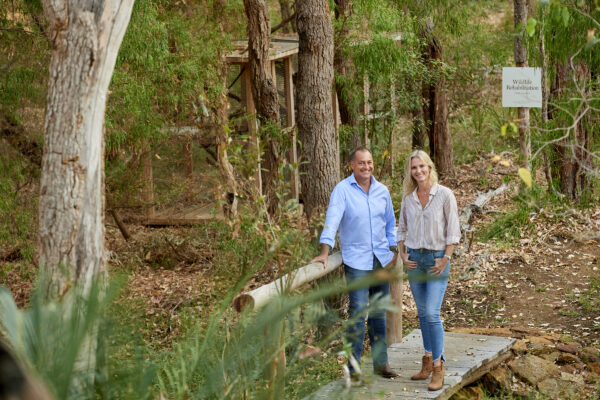
When owners Wendy and Barry originally purchased the property, there was already a growing awareness across the Southwest of the increasing pressure being placed on native habitat and critically threatened species throughout the region. Following the devastating Margaret River bushfires of 2011, that reality became even more visible as large areas of habitat throughout the region were damaged or destroyed, displacing wildlife populations including the critically endangered Western Ringtail Possum.
At the same time, it became increasingly clear that conservation efforts could not rely solely on national parks and publicly managed land. Privately managed properties would also need to play an important role in habitat protection, revegetation and biodiversity preservation throughout the Southwest.
Supporting conservation efforts for threatened habitat and species impacted by the fires, in addition to the growing urban and agricultural expansion throughout the Southwest, became a central part of the vision behind the creation of Passel Estate itself. That broader philosophy became part of the long-term direction of Passel Estate from the very beginning, highlighted through our name itself with a “passel” referring to the plural term for a group of possums.
In the years following the fires, the estate began providing sanctuary habitat for displaced Western Ringtail Possums amongst the property’s large peppermint trees, with those original possum release boxes still remaining visible throughout sections of the estate today. Walk through parts of the property quietly enough and you can still spot them tucked amongst the trees — small reminders of where many of these conservation efforts first began.
Conservation as Part of the Property
Over time, the conservation direction of the property continued expanding through:
- revegetation work
- wildlife habitat retention
- remnant bushland conservation
- supporting biodiversity corridors
- protecting native vegetation
- rehabilitation and soft-release infrastructure for possums
- incorporating nature into the visitor experience itself
Working alongside local conservation groups, community initiatives and wildlife rehabilitation efforts, new soft-release enclosures were later installed along the creekline to support the gradual rehabilitation and successful release of Western Ringtail Possums back into sanctuary habitat throughout the estate. Rather than existing separately from the winery, the surrounding bushland, biodiversity and conservation work is embedded into the identity of Passel Estate and the ecosystem experience of the property as a whole.

Upcoming Survey Study at Passel Estate
That broader conservation direction eventually led to conservation scientist Dr. Rochelle Steven becoming connected with Passel Estate during the foundational years of our conservation efforts, through her earlier Western Ringtail Possum work in the region.
At the time, Rochelle was heavily involved in Western Ringtail Possum research and community engagement work across the Southwest. Part of that work involved collaborating with private landholders and revegetation projects connected to possum habitat restoration and food tree planting. Passel Estate became one of the properties involved in some of those broader restoration discussions and planting efforts.
Years later, those early conversations have now evolved into plans for a more formal biodiversity baseline survey across the estate.
More Than a Biodiversity Survey
Importantly, the intention behind the upcoming work is not simply to “count possums.” The surveying itself is only one part of a much broader story unfolding across regions like Margaret River.
The broader objective is to begin building a clearer understanding of the biodiversity values of the property as a whole and explore how privately managed land within wine regions may continue contributing to long-term conservation outcomes into the future.
Rochelle also hopes the upcoming survey work, currently planned across Q3 and Q4 of 2026, can eventually help act as a broader proof of concept for additional biodiversity studies across privately managed land throughout Margaret River, the wider Southwest and beyond to other regions of Australia. Because increasingly, conversations surrounding wine, tourism, conservation and biodiversity are becoming independent with one another. In a region like Margaret River, the overlap is only getting more visible with time.
Next month in the Field Notes series, we will catch up for a Conservation Conversation with Rochelle, to explore her background, her earlier Western Ringtail Possum work throughout the Southwest, and the growing intersection between biodiversity, tourism and wine regions like Margaret River.
From birdwatching tourism research through to private land conservation and biodiversity monitoring, the conversation moves well beyond possums alone — into larger discussions surrounding the future relationship between conservation, regional identity and the evolving experience of wine country, before she unveils her plans for the Murdoch University research surveys planned here at Passel Estate later in the year.
Stay tuned.